Australia's Electricity Market Is Changing Fast — What Does It Mean for Your Power Bill?
9 September 2026 · By SwitchLoop
Australia’s electricity market is changing rapidly. From renewable energy to battery storage and new tariffs, discover what these changes could mean for your power bill.
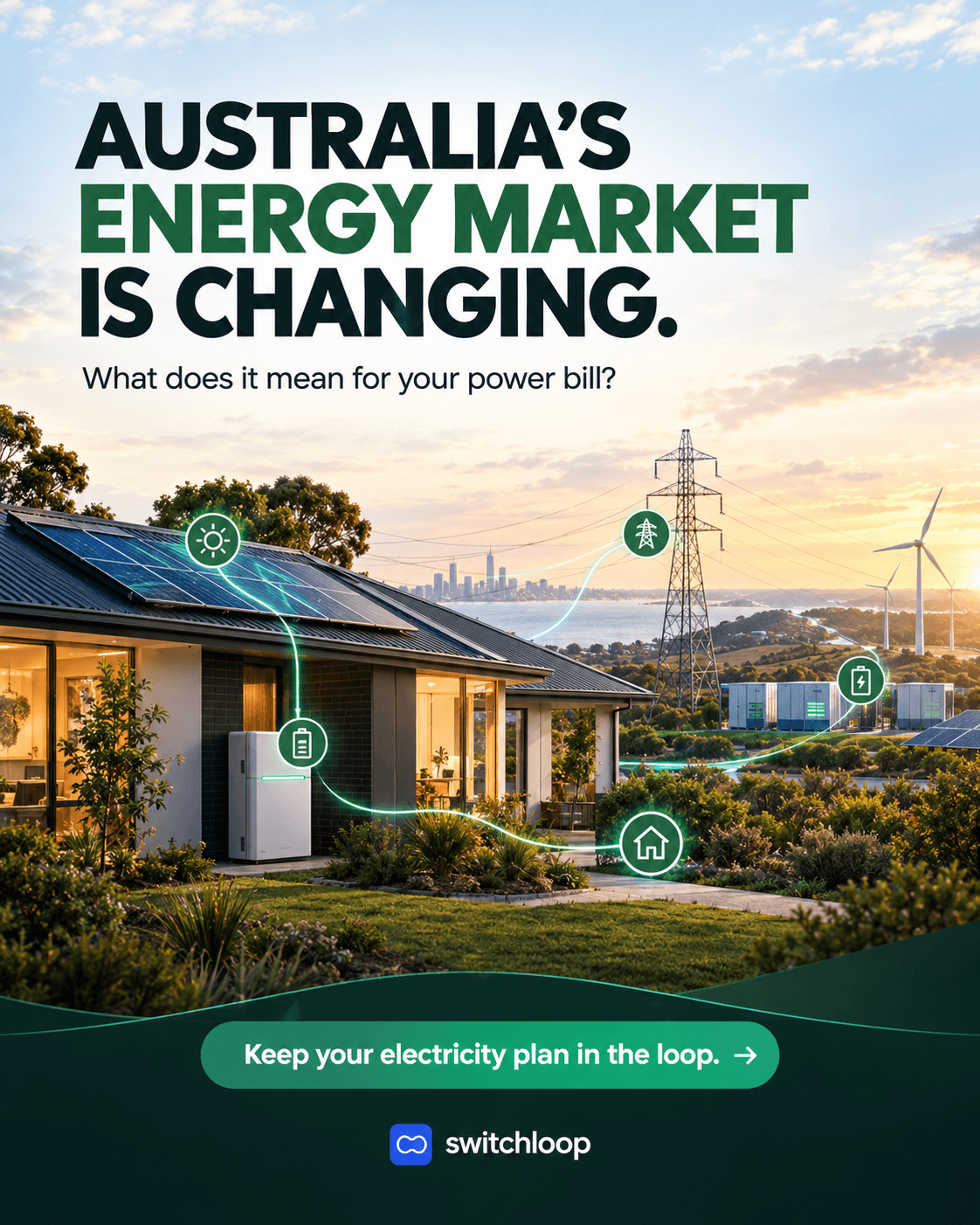
Australia's Electricity Market Is Changing Fast — What Does It Mean for Your Power Bill?
Australia's electricity market is going through a major transformation.
Solar generation is growing. Battery storage is expanding. Electric vehicles are changing how households consume electricity. Older power stations are retiring while new generation and storage projects are being developed.
And for households, all of this raises one important question:
What does it mean for my electricity bill?
The answer isn't as simple as saying electricity prices will go up or down.
The market is becoming more dynamic, which makes the electricity plan you choose increasingly important.
Australia's energy system is changing
The Australian Energy Market Operator (AEMO) recently published its 2026 Electricity Statement of Opportunities, examining electricity supply, demand and reliability across the National Electricity Market over the coming decade.
The report says the reliability outlook has improved, supported by record levels of new generation and storage, while also highlighting the need for continued investment as electricity demand grows and existing generation retires.
AEMO's 2026 Integrated System Plan also identifies renewable generation supported by storage and backed by gas as the lowest-cost pathway for Australia's electricity system as the country moves through its energy transition.
For consumers, however, the energy transition isn't just about where electricity comes from.
It's also about when electricity is generated and when households use it.
The time you use electricity can matter
Australia is increasingly producing large amounts of renewable electricity during the day.
That is one reason initiatives such as the Solar Sharer Offer have been introduced.
Eligible households in NSW, South Australia and South East Queensland can now access three hours of free electricity during the middle of the day, provided they meet the eligibility requirements. The scheme is designed to encourage households to shift some electricity consumption into periods when solar generation is abundant.
This points towards a broader change in the way Australians think about electricity.
The question isn't simply:
"How much electricity do I use?"
It can increasingly become:
"When do I use it, and what plan am I on?"
Your electricity plan matters more in a changing market
As new tariffs, offers and technologies emerge, households have more factors to consider.
A plan that was suitable several months ago may no longer be the most competitive option.
Your usage may have changed.
Your retailer may have introduced new offers.
Government programs may have created new options.
And the wider electricity market may have shifted.
This creates a problem for consumers.
Most people don't want to spend their time constantly researching electricity plans.
They have bills to pay, work to do and families to manage.
That's where SwitchLoop comes in.
Don't try to predict the market. Monitor it.
You don't necessarily need to know whether electricity prices will rise or fall next year.
You don't need to understand every wholesale market movement.
And you don't need to become an energy-market expert.
Instead, the more practical approach is to make sure your electricity plan continues to make sense as the market changes.
That's the thinking behind SwitchLoop:
Monitor your plan → automatically switch when a better option is available → monitor again.
The electricity market will continue evolving.
New technologies will change demand. More renewable generation and storage will reshape the system. Retailers will introduce new offers.
Consumers shouldn't have to constantly chase those changes themselves.
The future of electricity isn't just about generating more power.
It's also about helping households make smarter decisions about the power they already use.
And in a market that keeps changing, staying on the same plan simply because you haven't checked it may become an increasingly expensive habit.